War Thunder DLSS 5 Update: Eagle’s Shadow Arrives Mid-November With Up To 400 FPS at 4K
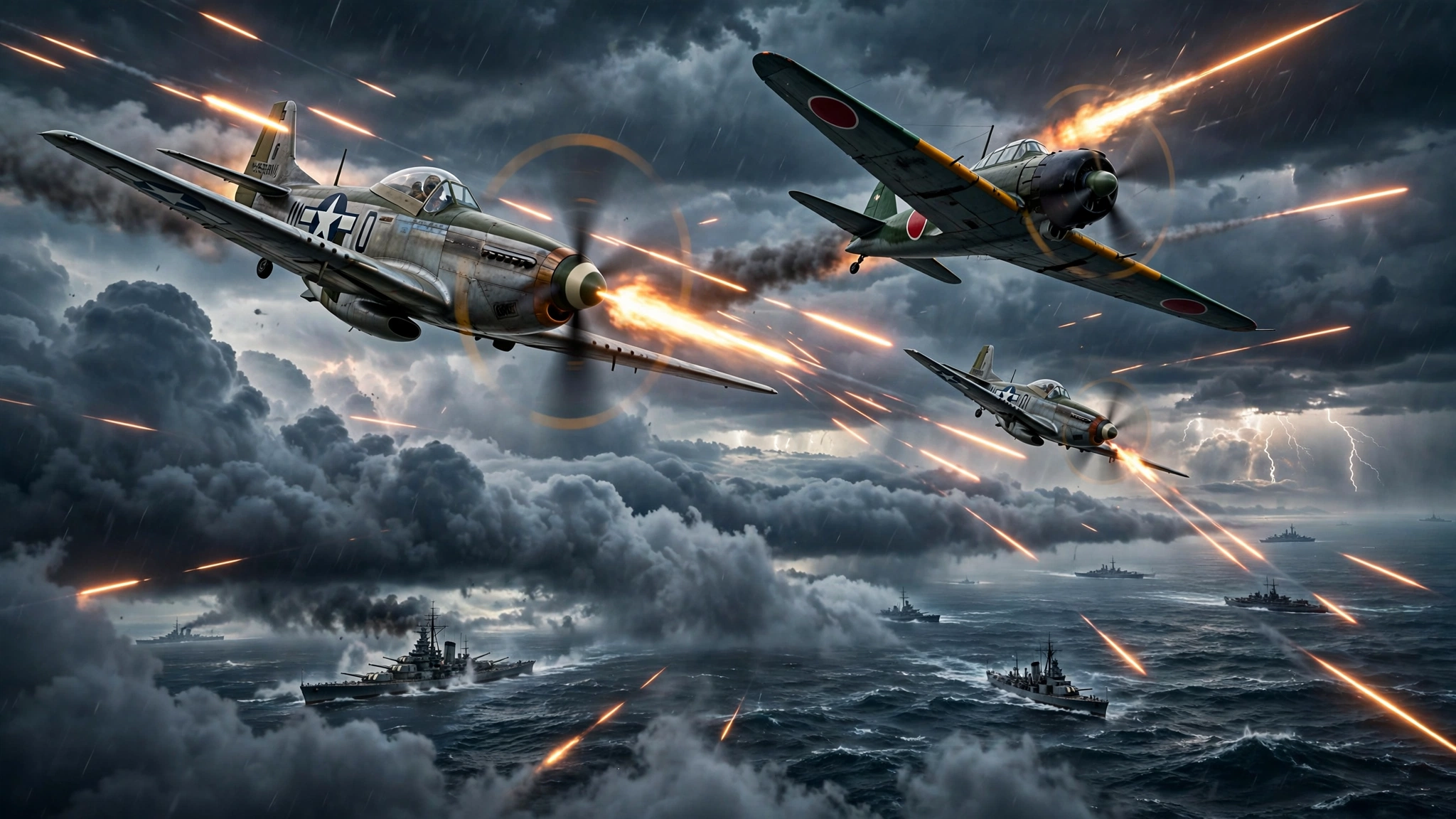
NVIDIA just confirmed War Thunder as the third official DLSS 5 game of November, and the headline number is hard to ignore: up to 400 FPS at 4K with 6X Multi Frame Generation.
If you play War Thunder, you probably have the same questions: what is actually in the Eagle’s Shadow update, what does DLSS 5 change about how the game looks and runs, what does that 400 FPS claim really mean, and what should you do on update day? This guide covers all of it.
What the Eagle’s Shadow update adds
Eagle’s Shadow is a major content patch for Gaijin Entertainment’s vehicular combat game, and it is bigger than a graphics upgrade. According to the press release reported by Wccftech, the update goes live in mid-November, so within the next two weeks, and it adds:
- New planes, ships, and tanks across the game’s vehicle rosters
- Cluster bombs for planes, a new weapon type for air battles
- Visual effect enhancements across the board
- DLSS 5 with 3D-Guided Neural Rendering, the headline feature
War Thunder is a free-to-play game with a famously long tail of updates, and Eagle’s Shadow is free for all players on PC. The patch is the reason DLSS 5 arrives in the game at all: the new rendering model ships as part of this update, not as a separate download.
What DLSS 5 Multi Frame Generation actually is
DLSS 5’s biggest talking point is Multi Frame Generation, and the “6X” in the headline refers to how many frames your GPU can produce for every real rendered frame. In plain terms: your graphics card renders one real frame, and AI generates up to five additional frames between real ones. The displayed frame rate multiplies, which is how the counter reaches numbers like 400.
That multiplication has limits worth understanding. Generated frames smooth out motion and make high-refresh displays feel incredible, but they do not reduce input latency the way real frames do. Your actual game logic still ticks at the base frame rate. In a twitchy flight or tank duel, the game feels responsive at the real frame rate, while looking smoother at the displayed one. Both things can be true at once.
This is also why NVIDIA pairs frame generation with NVIDIA Reflex in supported titles: Reflex keeps input latency down while frame generation drives the visible frame rate up. The two technologies exist to cover each other’s weaknesses.
What Neural Rendering means for War Thunder
The other half of the DLSS 5 package is the 3D-Guided Neural Rendering model, and War Thunder uses it differently than other games. NVIDIA has spent months debating the merits of Neural Rendering on character faces, but War Thunder is a game about machines, not people. NVIDIA’s Neural Rendering here focuses on highlights, shadows, materials, and microcontrast.
Microcontrast is the detail your eyes read in surfaces: the grain of armor plating, the sheen on a wing, the way light breaks across a ship’s hull. Improving it does not change the game’s art style. It changes how believable light looks on the materials the game already has. In a game built around vehicles and environments, that is exactly where a neural rendering model has the most to work with.
This is also a deliberate contrast with how other studios handle the same technology. Avalanche Software chose to preserve “character identity” in Hogwarts Legacy, masking faces out of the Neural Rendering pass and using the model for environmental detail, shadows, texture detail, shading, lighting, and reflections instead. The same tool, applied to a game with different priorities, produces a different result. In War Thunder, there are no faces to protect, so the model goes straight at the surfaces.
The 400 FPS claim, in context
Here is exactly what Wccftech reports NVIDIA is promising: with Neural Rendering, ray tracing, DLSS Ray Reconstruction, and 6X Multi Frame Generation all enabled, War Thunder runs at up to 400 frames per second at 4K, presumably with DLSS Super Resolution set to Performance Mode and running on the flagship GeForce RTX 5090.
Reading that claim properly means keeping four things in mind:
- 400 FPS is the ceiling, not the average. It is the best-case number on the best available hardware, not what every PC will produce.
- 6X Multi Frame Generation does the heavy lifting. Five of those six frames per real frame are AI-generated, so the base rendered frame rate is far lower than 400.
- Ray tracing and Ray Reconstruction run alongside it. This is not a cut-down visual preset. The image quality stack is fully loaded at the same time.
- The test GPU is a GeForce RTX 5090. Your results on anything less will be lower, and multi frame generation scales with the base frame rate, so weaker cards benefit less in absolute terms.
None of that makes the number meaningless. It makes it conditional, the way every vendor performance claim is conditional. On a top-end rig with a high-refresh monitor, War Thunder at several hundred frames per second is genuinely transformative for how the game feels. On a midrange card, the same update still brings Neural Rendering image quality and whatever frame generation tier your card can sustain.
War Thunder is the third game in DLSS 5’s November lineup
War Thunder rounds out a trio of official DLSS 5 integrations NVIDIA announced for this month. The other two are Avalanche Software’s Hogwarts Legacy and Everstone Studio’s Where Winds Meet, both announced last month.
We covered the Hogwarts Legacy DLSS 5 update in detail: with Neural Rendering, Ray Reconstruction, 6X Multi Frame Generation, NVIDIA Reflex, and ray tracing enabled, that game reportedly runs at up to 300 FPS at 4K on the RTX 5090. Three hundred there, four hundred here: the difference comes down to how demanding each game’s rendering load is, not to a difference in the DLSS technology itself.
Where Winds Meet, the free-to-play action RPG with over 100 million players globally, gets DLSS 5 on November 23 or 24, depending on your region. That makes War Thunder the middle act of the three, landing in mid-November.
One notable absence from the lineup: Phantom Blade Zero was originally listed among the games due to support DLSS 5, but Game Director Soulframe Liang hinted at a change of mind in a social media post, and neither NVIDIA nor S-GAME has commented on the matter since. Until someone confirms otherwise, treat its DLSS 5 support as on hold.
Which GPUs get DLSS 5
NVIDIA says DLSS 5 will be available to GeForce RTX 50 Series GPUs and laptops, RTX Spark PCs, and even through the cloud for GeForce NOW Ultimate subscribers. Multi Frame Generation in particular is an RTX 50 Series feature, so if you are on an older card, check exactly which DLSS 5 features your GPU supports before expecting the full stack.
The GeForce NOW Ultimate option is worth noting for players without current hardware. Cloud streaming already adds its own latency, which is the one thing frame generation does not fix, so weigh that trade-off before treating a streamed session as equivalent to a local one.
What PC players should do on update day
When Eagle’s Shadow goes live in mid-November, the practical checklist is short:
- Update your drivers first. Make sure you are on the latest NVIDIA Game Ready driver before the patch lands, so the new rendering paths have the support they need.
- Look for the new settings. In War Thunder’s graphics options, look for Neural Rendering and 6X Multi Frame Generation toggles after the update. Enable frame generation only after your base frame rate is healthy, since it multiplies what is already there.
- Tune Super Resolution sensibly. The headline numbers assume Performance Mode at 4K. If your card is not a 5090, start with a balanced preset and adjust from there rather than copying the flagship configuration.
- Keep Reflex on if it is offered. It offsets the input latency trade-off that comes with generated frames, which matters most in a game about aiming.
- Remember the update is free. All War Thunder players on PC get Eagle’s Shadow, the new vehicles, and the DLSS 5 upgrade at no cost.
The verdict: should War Thunder players care?
Yes, and not just because of the big number. The 400 FPS figure is a best-case headline, but the substance underneath it is real: a free update that adds Neural Rendering image quality to a game built around materials and light, plus frame generation that makes high-refresh displays feel dramatically smoother.
The players who gain the most are the ones already on RTX 50 Series hardware with high-refresh monitors. They get the full stack: Neural Rendering on highlights, shadows, materials, and microcontrast, ray tracing with Ray Reconstruction, and 6X Multi Frame Generation multiplying it all. Everyone else still gets a free content update with new vehicles, cluster bombs, and visual improvements, which is a solid patch even before the DLSS story.
One honest caveat: frame generation is not free performance. It is AI-interpolated smoothness on top of a real frame rate, and it does not make your aim faster. Judge it by how the game feels in your hands, not by the counter in the corner. If the motion looks cleaner and the controls still feel sharp, it is working as intended.
News Source: Wccftech