RTX 5090 Price Explodes 370% Over MSRP as the Entire RTX 50 Lineup Spirals
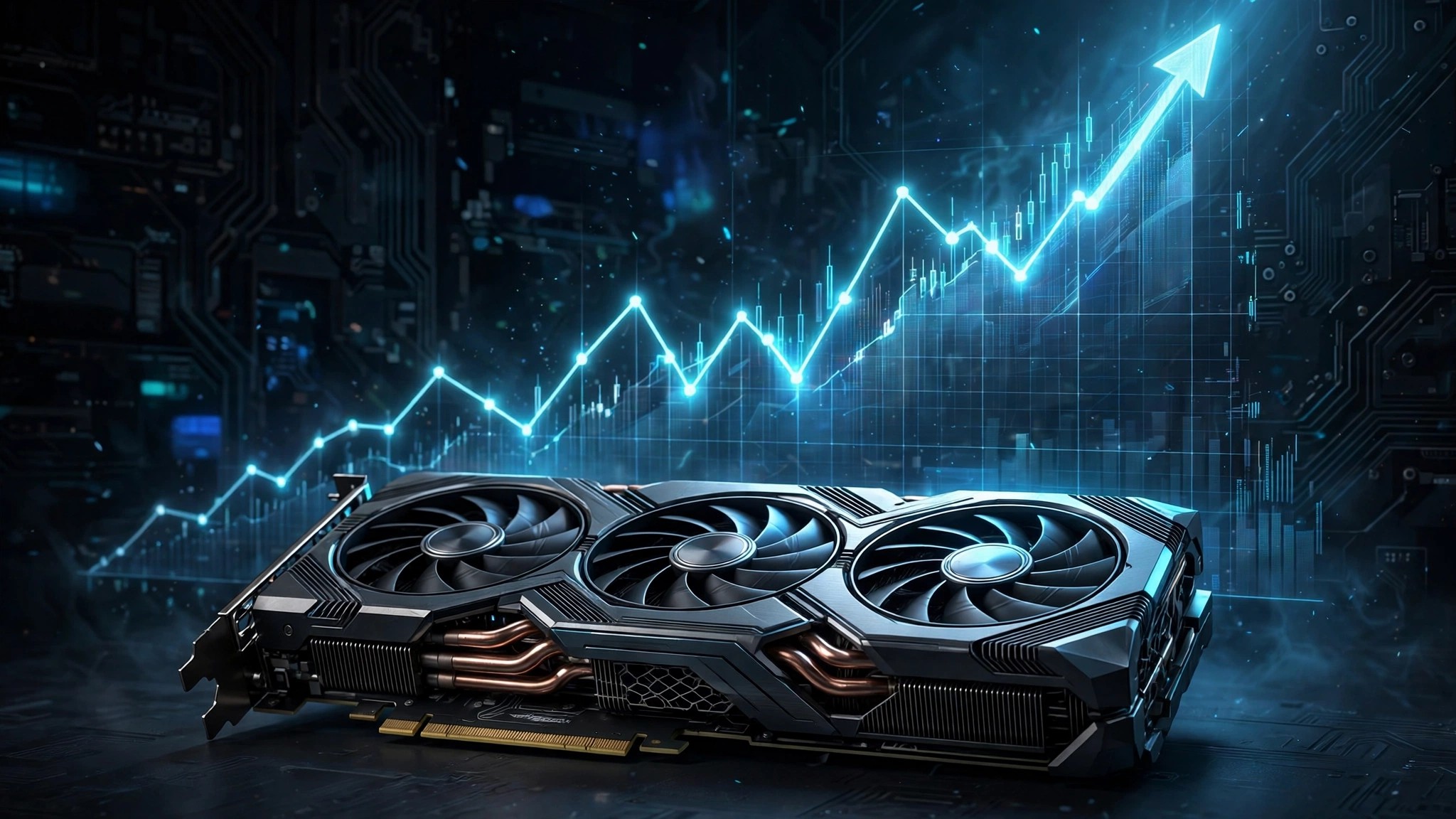
The graphics card market has officially lost its mind. Every card in NVIDIA’s RTX 50 stack now sells far above its launch price, and the flagship has reached territory that would have sounded like a joke a year ago. Here is the full picture: what each card costs now, why prices exploded, whether relief is coming, and what you should actually do about it.
The RTX 5090 Now Costs More Than $9,000 in the US
The GeForce RTX 5090 now costs more than $9,000 in the United States, a staggering 370% over its launch price, according to Wccftech, citing TechSpot.
Reported November 2, 2026, the numbers paint a brutal picture for GPU buyers. Every card in NVIDIA’s RTX 50 stack has seen its price climb between 40% and 120% since launch, with the flagship leading the charge off a cliff.
How Bad Is the Hike Across the Whole Stack?
The damage is not limited to the flagship. Wccftech, citing TechSpot, breaks down the over-MSRP figures card by card, and the full list is grim:
- RTX 5090: 370% over MSRP in the US, 262% globally, with a 36% average price hike in a single month in the US
- RTX 5080: 120% over MSRP in the US, 77% globally
- RTX 5070 Ti: 67% over MSRP in the US, 60% globally
- RTX 5070: 64% over MSRP in the US
- RTX 5060 Ti 16GB: 84% over MSRP in the US, pushing it near $800
- RTX 5060 Ti 8GB: 40% over MSRP in the US, 24% globally
- RTX 5060: 51% over MSRP in the US, 40% globally
- RTX 5050: climbed from $260 to $420 this year, 68% over MSRP in the US and 41% globally
The pain is global. In Germany, Australia, the Philippines, and the Netherlands, RTX 5090 prices rose 40% or more compared with September. Brazil was the least affected market in the report, but even there the trend line points up.
The card has also reportedly been discontinued, which only makes existing stock harder to find and easier to price-gouge.
What MSRP Means and Why It Matters Here
MSRP stands for manufacturer’s suggested retail price: the price NVIDIA announces when a card launches. In a healthy market, most cards sell at or near MSRP within a few months of launch, with partner models carrying a modest premium for better coolers and factory overclocks.
That is why the over-MSRP percentage is the most useful number in this whole story. It strips away the noise of different regions and retailers and tells you one thing: how far the market has drifted from what the card was supposed to cost. When a midrange card costs what a high-end card used to, every buying decision you thought you understood needs to be rechecked.
Why Prices Exploded: the Memory Crisis
The driver behind the surge is the ongoing memory price crisis. Soaring memory and component prices are pushing the entire GPU stack beyond what most buyers can afford. Wccftech, citing TechSpot, notes that the reported discontinuation of the 5090 has only tightened supply further, and there is no sign of relief on the horizon.
To understand why memory prices move GPU prices so hard, it helps to know what is inside a graphics card. A large share of a GPU’s bill of materials is memory: the GDDR chips soldered around the die. When memory gets expensive, board partners pay more to build every card, and that cost lands on the shelf price. There is no way to build a cheaper card around expensive memory.
Several forces are squeezing memory supply at once:
- AI demand: data center and AI hardware consumes enormous volumes of high-bandwidth and GDDR memory, pulling supply away from consumer graphics
- Manufacturing priorities: memory makers allocate their limited fab output to the most profitable contracts first, and consumer GPU memory is not at the front of that line
- Component knock-on effects: when one part of the supply chain tightens, substrates, power components, and assembly capacity get bid up too
- Thinning flagship supply: the reported discontinuation of the RTX 5090 leaves buyers chasing a shrinking pool of cards, and every price tracker in the report shows the same upward slope
Scalpers and speculative sellers amplify all of this. When buyers expect prices to keep rising, some buy early out of fear, which pulls demand forward and pushes prices up faster. It is a feedback loop, and it is running at full speed right now.
Has This Happened Before?
Yes, and that history is worth remembering. The GPU market has gone through brutal price spikes before, and each time the same pattern played out.
The crypto mining booms turned midrange cards into luxury goods twice, with miners buying cards by the pallet and gamers left fighting over scraps. The pandemic-era shortage did the same thing through a different route: factories slowed, shipping seized up, and a card that launched at a sensible price sold for double or triple on the street for more than a year.
In every case, prices eventually came back down. New supply arrived, demand cooled, and the cards that sold for absurd premiums quietly returned to sane pricing. The spikes felt permanent while they lasted, and none of them were. That does not mean this spike ends tomorrow: new fab capacity takes years to come online, and AI demand is not going away. But distorted prices do not hold forever. They hold long enough to punish anyone who buys at the peak, and then they break.
Will Prices Drop?
Honestly, nobody can tell you when. Wccftech, citing TechSpot, reports no sign of relief on the horizon, and the near-term signals point the wrong way.
The timing makes it worse. With the holiday season approaching, demand typically rises just as supply is at its thinnest. Retailers have little incentive to cut prices when shelves clear at current ones, and the reported discontinuation of the RTX 5090 means the flagship’s supply will only shrink from here.
What can change the picture: memory prices stabilizing, new supply reaching the channel, or demand finally cracking as buyers refuse to pay. Watch memory price reports and retail trackers rather than rumors. When the wholesale cost of memory turns, street prices follow with a lag. Until then, assume the trend in the report continues.
Which Cards Are Hit Worst for Their Money?
Relative to their value, the mainstream cards are suffering the most. The RTX 5060 Ti 16GB is up 84% over MSRP in the US, pushing it near $800, which makes it the biggest VRAM-price victim of the whole stack: a card meant to be the sensible 1440p pick now costs what high-end cards used to.
When the budget tier costs $420 and the midrange tier nears $800, the entire concept of a budget or midrange build breaks. That is why this crisis hurts regular gamers more than the $9,000 flagship number suggests.
Should You Buy Right Now?
Our advice is simple. Do not buy a graphics card at these prices. The current market rewards patience, and the used market for RTX 30 series cards is suddenly the smartest place to look for a sane deal.
If your current card still runs your games, keep it. A card you own at zero extra cost beats any card at a 50 to 370% markup. Clean it, repaste it if thermals are climbing, and wait.
If you genuinely need a card today because yours died, buy the cheapest thing that gets you running and treat it as a stopgap. The used market is your friend here: last-generation cards have already taken their depreciation hit, so you lose far less if you resell when prices normalize.
If you are weighing mid-range options for later, our RTX 5060 vs RX 9060 XT benchmarks break down what each card actually delivers for your money. And if you are building on a tight budget, our budget gaming PC build guide shows how to stretch every dollar until prices settle.
Until memory prices come back down, the RTX 50 stack is effectively a luxury market. The RTX 5090 at over $9,000 is not a product for gamers anymore. It is a trophy for scalpers and a warning for everyone else.
The Verdict
Right now, the RTX 50 lineup is a market for everyone except gamers. The RTX 5090 at over $9,000, the 5060 Ti 16GB near $800, and a budget 5050 at $420 all tell the same story. Memory prices have broken the normal GPU value ladder, and nothing in the report suggests a quick fix.
The practical playbook is short:
- Do not buy new at these prices. Every tier is 40 to 370% over MSRP, and buying now locks in the worst value in years.
- Keep your current card alive. Maintenance beats a markup. A working card today is worth more than a new card at double its price.
- Watch memory prices, not rumors. When wholesale memory costs turn, street prices follow. That is your buy signal.
- Consider the used market only if you must buy now, and only at prices that make sense against MSRP, not against today’s inflated listings.
Until the component crisis eases, waiting is the only winning move. Prices this distorted do not hold forever, but they can hold long enough to punish anyone who buys at the peak. Keep your current card, watch the trackers, and let the scalpers eat the markup.
News Source: TechSpot (via Wccftech)