Project Helix Is Xbox’s Big Bet: A Console That Plays Your PC Games
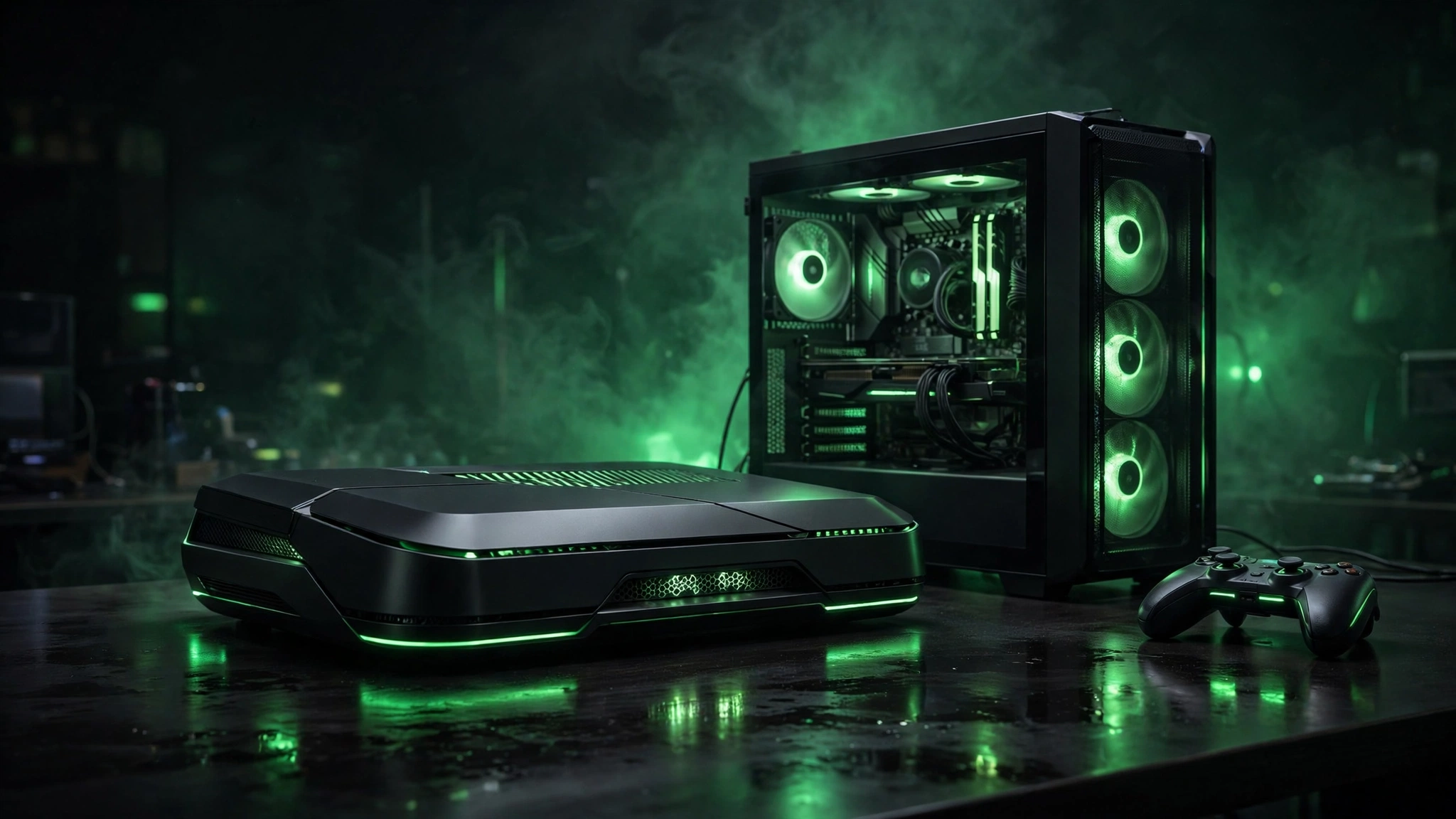
Microsoft has finally said the quiet part out loud. Project Helix, the codename for the next Xbox, is a console that plays PC games. That is not a rumor or a leak. It comes straight from Jason Ronald, Xbox vice president of next generation, in a new interview published in the free digital Xbox 25th Anniversary Magazine.
The confirmation lands at a moment when the line between console and PC gaming is already blurring. Microsoft has spent the last two years pushing Xbox games onto PC, rebuilding the Xbox PC app for speed, and shipping the ROG Xbox Ally handheld. Helix looks like the point where all of that converges into one machine. Here is what Xbox actually confirmed, what it carefully did not say, and what it means for PC gamers.
What Xbox Actually Confirmed
Ronald framed Helix as the “ultimate gaming machine” built to remove the barriers that have historically separated console and PC play. His pitch is simple: your whole library, in one place, instantly available.
- Helix plays PC games. Ronald put it plainly: “Helix is designed to be a console that is also capable of playing games from your PC. It is not a PC that can also play console games.”
- Four generations of Xbox carry over. Your Xbox library and progression from four generations of consoles will be available instantly on Helix.
- Power users still get control. If you want deeper customization across settings and performance options, Ronald said you can absolutely do that.
- Neural rendering is central. Helix will lean on neural rendering to “deliver a new level of visual fidelity in more efficient and innovative ways.”
- It is a family of devices. Xbox CEO Asha Sharma had previously described Helix as a family of devices, and the magazine uses that language again. No lineup, design, or reveal date was shown.
The magazine calls Helix the “crown jewel in a platform able to move with you.” That is marketing language, but the direction behind it is clear. Microsoft wants one Xbox platform that follows you from the living room TV to a handheld to your PC, and feels distinctly Xbox on every screen.
A Console That Plays PC Games, Not a PC
The distinction Ronald drew matters more than it first sounds. Helix is a console first. It is designed to be easy, intuitive, and instant, the way a console is. The PC games come to you inside that console experience, rather than you sitting down at a Windows desktop that happens to play console games.
That framing answers one of the biggest questions about the next Xbox without answering all of them. Microsoft confirmed PC games will run on Helix, but it did not name Steam or any other PC storefront. Do not assume your Steam library automatically transfers until Microsoft says so in plain terms. The company confirmed the capability in general and stopped there.
For PC gamers, the practical question is how open the box will be. A console that plays PC games could mean a curated Xbox storefront that also sells PC builds, or it could mean something much closer to a living room PC. Ronald’s promise that power users can dig into settings and performance options leans toward the flexible end of that range, but the exact storefronts and the exact limits remain unconfirmed.
Neural Rendering Is the Real Story
If the PC games news is the headline, neural rendering is the technology that makes it plausible. Ronald tied it directly to the component crisis that has driven up the cost of consoles and storage. Neural rendering, in his words, is “an entirely new way to generate a frame without requiring more computational horsepower, additional memory, and things like that.”
That is the same logic behind the upscaling and frame generation PC gamers already use every day. Neural rendering tech like DLSS 5 already squeezes more visual quality out of existing hardware. Wccftech notes that Ronald was likely talking about neural rendering in the broader sense, including AI upscaling, frame generation, and ray reconstruction, rather than one specific implementation. Microsoft has not confirmed the exact feature set, so treat the details as open until the company shares them.
Ronald also reset expectations about what the next generation is even for. He said the next generation is not defined by 8K or 240Hz, or by the traditional spec metrics. Instead, he pointed to gameplay innovation, deeper immersion, and new kinds of games that were not possible before. He predicted more innovation in the next three to five years than in the last ten. That is a bold claim from a platform holder, and it only holds up if the silicon and software behind Helix deliver something genuinely new rather than a faster version of the same box.
A Family of Devices, Not One Box
The “family of devices” language is the second big clue. Helix may not be a single console. It may be a range of hardware built around one platform, with different devices aimed at different screens and budgets.
The ROG Xbox Ally already hints at how that works in practice. Ronald described the Ally as a precursor to Helix, informed by many of the design concepts behind the new platform. Microsoft also used the Ally launch to test Helix features, according to GameGPU. If the handheld was the rehearsal, Helix is the main performance.
Ronald described the cross-device goal in concrete terms: the same experience should feel intuitive and distinctly Xbox whether you play on a large TV, stream to a small handheld screen, or sit at a PC with a mouse, keyboard, and higher information density. Each screen gets an interface tuned to its strengths. That is a platform pitch, not a single console pitch, and it explains why Microsoft keeps talking about Helix as a family rather than a box.
Backwards Compatibility and Preservation
Compatibility is not an afterthought for Helix. Ronald said it is core to Xbox and is actively shaping how the platform is designed, and how Microsoft works with partners. The goal is not only that old games keep working, but that they can be played better than ever in the future.
That matters because Microsoft is explicitly designing Helix-era games to be preserved for 20 or 30 years. The four generations of Xbox library that carry over are the proof of concept. For players, it means the library you build on Helix is meant to outlive Helix itself.
It also connects to something Microsoft already shipped. The company recently made 21 classic Xbox games playable on PC, including KOTOR and Morrowind. Helix extends that same idea in the other direction: the console reaches toward the PC library, while the PC keeps absorbing the console library.
What We Still Do Not Know
For all the clarity on direction, Microsoft shared almost nothing concrete. No specs, no price, no design, and no release date. Here is the honest status of every open question.
| Question | Status on November 16, 2026 |
|---|---|
| Release date | Not announced. Speculation ranges from late 2027 to holiday 2028. Neither date is confirmed. |
| Price | Not announced. Ronald acknowledged the component crisis and the need to stay affordable. |
| Specs (CPU, GPU, RAM, storage) | Not shared. No chip, memory, or storage details were given. |
| Steam support | Not confirmed by name. PC games are confirmed in general, not any specific storefront. |
| Design and device lineup | Not shown. Described only as a family of devices. |
| Neural rendering details | Confirmed as a focus. Exact techniques and performance targets are not confirmed. |
One rumor deserves a clear label. GameGPU reports that PlayStation 6 targets 120 FPS while Xbox Helix targets 144 FPS at 4K. That is an unverified report, not a Microsoft statement. Do not treat it as a spec until Microsoft or a second source confirms it.
What This Means for PC Gamers
Helix is good news for PC gamers even if you never buy one. Here is why.
- Your library gains value. If a console plays PC games, the PC library becomes the center of gravity for the whole Xbox platform. Games you already own become more useful, not less.
- Neural rendering gets a bigger stage. A console built around AI frame generation pushes developers to adopt the tech across the board, which benefits PC ports and PC-first games too.
- Settings control survives. Ronald explicitly promised power users deeper customization. That is a PC value, stated out loud by a console maker.
- Preservation cuts both ways. A platform designed to keep games playable for decades is a platform where your purchases age better.
- Competition heats up. A console that plays PC games pressures Sony and Nintendo to answer, and pressures Microsoft to keep the PC experience honest. That is leverage for players on every platform.
The risk is the opposite one: a walled garden wearing PC clothes. If Helix plays PC games only through a locked Xbox storefront, with no Steam and no real choice, then the “removes all barriers” pitch rings hollow. The test will be the storefront list and the settings menu when Microsoft finally shows the hardware.
Bottom Line
Project Helix is now real in a way it was not a week ago. Microsoft has confirmed the concept in its own words: a console that plays your PC games, built on neural rendering, spanning a family of devices, with four generations of Xbox history riding along. What it has not confirmed is almost everything else: the date, the price, the specs, the storefronts, and the design.
That makes Helix a story to follow, not a product to judge yet. The direction is exciting and the gaps are wide. The next real test is simple: when Microsoft shows the hardware, check whether the PC games promise includes the stores PC gamers actually use. Until then, Helix is the most interesting console Microsoft has talked about in years, and the most unproven.