Seven Classic Games Just Got Unofficial PC Ports, From Rogue Leader to Pokemon XD
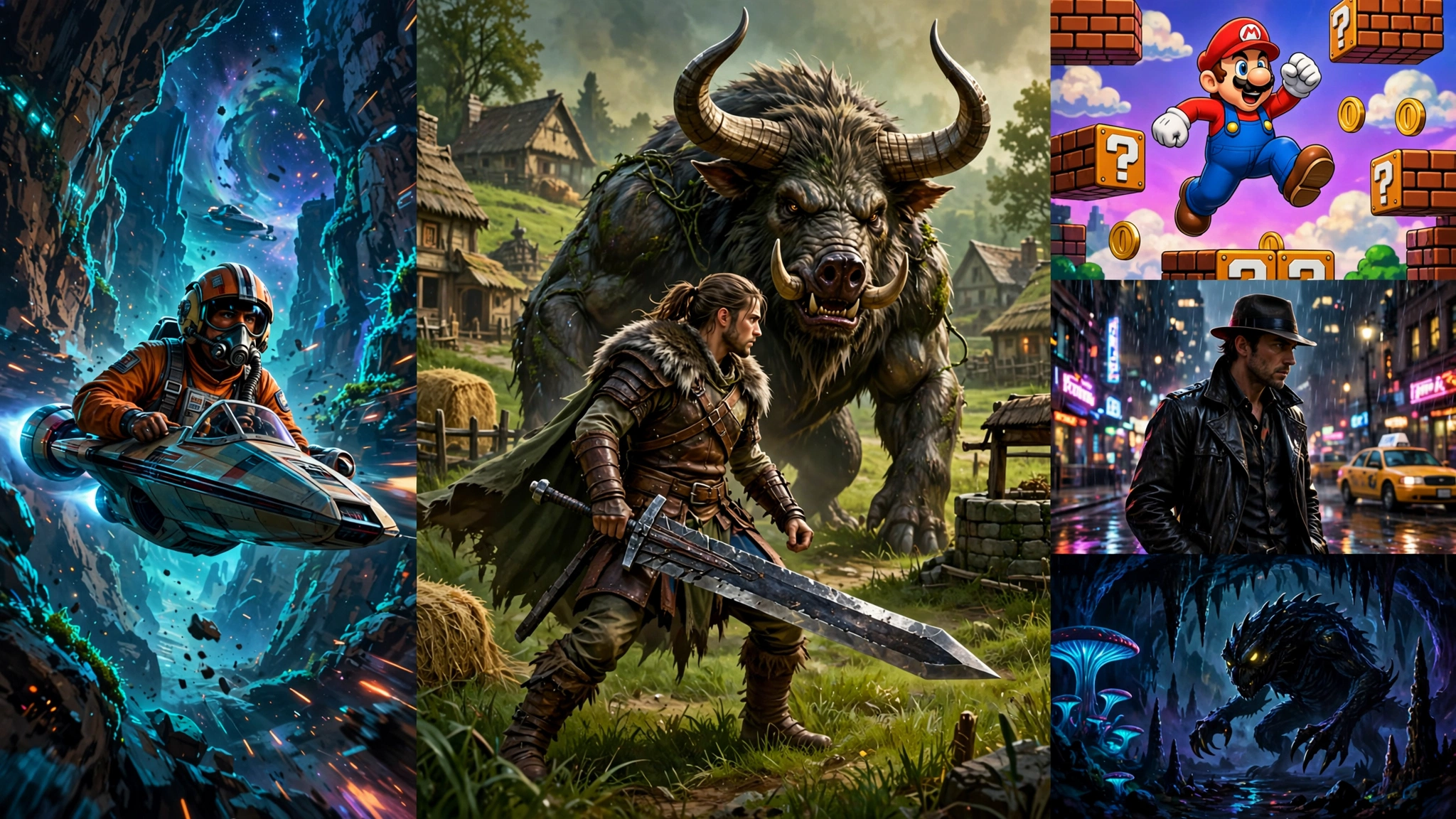
PC gamers, the time has come. Seven classic console games just got unofficial native PC ports in one wave, and the list reads like a retro wish list. Star Wars Rogue Leader, Monster Hunter Generations Ultimate, True Crime: New York City, Super Mario 3D Land, Pokemon XD: Gale of Darkness, Mario Kart 7, and Mega Man Legends are all part of it. Six of them are playable on PC right now. The seventh is a decompilation project laying the groundwork for a port to come.
DSOGaming rounded up the whole batch this week, and the details on each project are genuinely impressive. These are not emulator wrappers. Most of them recompile the original console code into native PC software, which means higher resolutions, higher frame rates, widescreen support, and mod support that emulation could never offer cleanly. Here is every port in the wave, what it adds, and what you need to play it.
What Are Unofficial PC Ports, and Why Do They Beat Emulation?
An unofficial PC port rebuilds a console game to run natively on Windows or Linux. The most common method right now is static recompilation: a tool reads the original game code from your own disc or cartridge dump and translates it into C or C++ ahead of time, then a native runtime stands in for the console hardware. The game then runs as a PC program, not as a console program being translated on the fly.
That difference is why these ports can do things emulators struggle with. Resolution scaling applies cleanly because the renderer is a modern PC renderer. Frame rates can go far past the original cap without speeding up the game, because the game logic and the frame rate are separated. Widescreen works properly because the HUD, menus, and cutscenes are adjusted to fit, not just stretched. And features like texture packs, cheat codes, and save imports from emulators slot in naturally.
Every project in this wave follows the same rule: no game assets are included. You must supply your own legally obtained copy of each game, usually as a disc image or cartridge dump. The downloads contain only the recompiled code and the runtime. That is the same approach as the Gran Turismo 3 native PC port we covered this morning, and it is the standard the whole scene works to.
All Seven Ports at a Glance
| Game | Original platform | Project | Status | Headline feature |
|---|---|---|---|---|
| Star Wars Rogue Leader | GameCube | Red Two | Playable | 4K, up to 144 FPS, RetroAchievements |
| Monster Hunter Generations Ultimate | Switch | MHGU Recomp | Fully playable | Up to 240 FPS, online multiplayer |
| True Crime: New York City | Xbox | True Crime NYC Recomp | Beta | Up to 32:9, FSR 4.1, HDR, no loading screens |
| Super Mario 3D Land | Nintendo 3DS | Super Mario 3D Land Recompiled | Experimental | 4x upscaling, optional 1080p texture pack |
| Pokemon XD: Gale of Darkness | GameCube | Pokemon XD PC Port | Public beta 0.6.1 | Gen 4 Pokemon, online battles, randomizer |
| Mario Kart 7 | Nintendo 3DS | MK7Recomp | Playable | Windows, macOS and Linux builds |
| Mega Man Legends | PlayStation | Mega Man Legends Decomp | Decompilation in progress | Matching decomp, not a playable port yet |
Star Wars Rogue Leader: Red Two
Star Wars: Rogue Squadron II, Rogue Leader was one of the GameCube launch games that showed what the console could do, and it has been stuck on that console ever since. The new port, called Red Two, changes that. It is a static recompilation of the GameCube game for PC, built by developer gminustwo, and the project page lists it as playable on Windows and Linux, including a Steam Deck AppImage build.
The feature list is one of the strongest in the whole wave:
- Internal resolution up to 4K, with 4x MSAA and up to 16x anisotropic filtering
- Frame rates of 60, 90, 120, and 144 FPS, with the game still running at its normal speed
- Widescreen and ultrawide support at 16:9, 16:10, and 21:9, with the world, HUD, menus, and cutscenes adjusted to fit
- Built-in RetroAchievements support, softcore only, so save states and cheats stay usable
- Support for HD texture packs made for Dolphin, with no format conversion needed
- Gecko and Action Replay codes, plus save imports from Dolphin, including memory card files
- Save states, with 8 slots, and a launcher that remembers your disc image
Shaders are compiled before the game starts instead of during play, which should keep the action smooth and cut the stutter that shader compilation usually causes. The project needs your own disc image of the USA release, revision 0, and a CPU with AVX2 support, which means Intel Haswell or AMD Ryzen or newer. It is a small project by the numbers, but the polish is obvious: the README covers everything from button prompt styles to a full keyboard layout.
Monster Hunter Generations Ultimate: MHGU Recomp
Monster Hunter Generations Ultimate is the biggest project in this wave by a clear margin. MHGU Recomp, by developer morerokk, has been in the works since October 2026 and already counts 61 releases and more than 650 stars on GitHub. The project page calls it fully playable in singleplayer and multiplayer, and the feature list reads like a remaster wish list.
The headline upgrade is the frame rate. The port supports anything from 30 to 240 FPS, and it fixes several issues that normally show up when the game runs at high frame rates on emulators. Graphics get resolution scaling with supersampling, MSAA, FXAA, AMD FSR 3.1, HDR output, VSync, and a longer draw distance, so villages and hubs show people and objects from much farther away. Any widescreen aspect ratio works, with HUD adjustment options for ultrawide screens, and there is full keyboard and mouse support with native mouse control of the menus.
Multiplayer is where it gets really interesting. Online play runs through the game’s Local Wireless feature, with a preloaded online server included, and you can also host your own or connect directly to friends. Small monsters are synced between players, monster HP can scale with the player count, village quests can be played in multiplayer hubs, and everyone gets urgent quest credit. The project also adds networking fixes and lag compensation similar to newer Monster Hunter games, plus fast-forward for unskippable cutscenes, Discord Rich Presence, and support for almost all emulator mods and cheat codes. There is even an experimental Android build.
You will need your own copy of the game, version 1.4.0, dumped from your own Switch, plus a CPU with AVX2 support and a GPU with Vulkan 1.2 support and at least 1GB of VRAM. The game files come to about 12.3 GB. An FSR 4 module is available separately for AMD users who want it.
True Crime: New York City
True Crime: New York City is the forgotten open-world game of the PS2 and Xbox era, and its PC port is one of the most complete in this wave. The project, by developer roz1077, is a beta recompilation port of the original Xbox release for Windows and Linux, and it is already on Beta 4.3. It runs on Direct3D 12 on Windows and Vulkan on Linux, with no emulator and no Proton.
The graphics menu alone is worth the download. Players get render scale, aspect ratio, field of view, and object detail controls, plus MSAA, SMAA, bloom, depth of field, and GTAO ambient occlusion, with a choice of sharper or softer shadows. TAA with per-object motion is included, along with AMD FSR 1 and FSR 3.1 on both platforms and FSR 4.1 on Windows with a supported AMD GPU. The 3D view supports aspect ratios up to 32:9, with the HUD and menus kept in the center, and HDR output is available on Windows and Linux.
The quality of life improvements go further than graphics:
- Almost no loading screens, because the game reads data straight from your drive instead of a DVD
- Shader pipelines saved between runs and built in the background at startup, to cut first-time hitches
- Busier streets, with settings for pedestrian detail, crowd density, traffic density, and traffic distance
- Bug fixes, including the Copland traffic fix, a cap on car-scrape damage, and a fix for the Human Cargo mission prompt
- Custom music from MP3, OGG, FLAC, or WAV files, plus texture replacement with PNG and DDS packs
- Full controller support with hot-plug and matching button prompts, raw mouse aim, and a native SteamOS build for the Steam Deck
The port supports the US NTSC disc and both European PAL discs, with separate saves and settings per region, and the European discs even unlock French, Spanish, and Italian text. One thing to know before you start: the first launch compiles the game code and can take a while, though later launches reuse the cache.
Super Mario 3D Land
Super Mario 3D Land is the 3DS Mario game that plays like a 2D Mario in 3D, and it now has an experimental native port for Windows and Linux. The project, by developer Okxmir, recompiles the European game’s ARM code and reads the assets from your own local ROM. It is very new, created in mid-November 2026, so expect rough edges, but the feature list is already solid.
The port renders with Vulkan at a 60 Hz presentation target while keeping the original 30 Hz game logic, with camera-motion smoothing. Upscaling runs at 1x, 2x, or 4x, and an optional 1080p texture pack by Henriko Magnifico sharpens the game further. Aspect ratios cover the original 5:3, 16:9, and an experimental 21:9 mode, and the widescreen layout can show the upper game screen on its own, with the touchscreen available as an inset you can toggle. The mouse works for touchscreen input, and the game supports controllers and keyboards, with eight languages available at build time.
Mario fans already have an unofficial Super Mario Odyssey port to play on PC, and 3D Land joins it as the smaller, tighter classic of the pair. The project notes that the title screen, opening cinematic, first world map, and early gameplay in course 1-1 have been checked locally, which tells you honestly how early this one is. If you try it, that honesty is a feature, not a warning to ignore.
Pokemon XD: Gale of Darkness
Pokemon XD: Gale of Darkness is the GameCube sequel to Pokemon Colosseum, and its PC port might be the most ambitious project in the wave. Built from the Pokemon XD decompilation, it is in public beta at version 0.6.1, and it is playable from a new game into the story, with known bugs. The project page is upfront about that: expect crashes, stalls, and graphics differences, and keep backups of saves you care about.
What makes it stand out is how much it adds on top of the original game:
- Three play presets: Original plays exactly like the GameCube release, Enhanced adds the port improvements, and Custom is your own mix
- A Gen 4 pack that adds 107 Pokemon, from Turtwig to Arceus, built from your own Pokemon Battle Revolution disc, with Battle Revolution battle models as an option
- Online battles and trades with a friend using a 6-letter room code, with no server in the middle
- A randomizer with Light, Classic, Chaos, and Custom modes, plus Nuzlocke and level-cap challenge rules
- Support for the Pokemon XG fan game, played from your own XG disc, with its own saves
- Save imports from Dolphin, GameCube memory cards, Japanese and European saves, GBA games, and Pokemon Colosseum
- Language packs built from your own Japanese or European discs, so you can play in Japanese, German, French, Italian, or Spanish
The Windows build is the main one, developed and tested daily, with Linux and Mac builds available for testers. You need your own copy of the game, USA disc GXXE01, as a disc image. For a beta, the scope is remarkable, and the Gen 4 pack alone makes it the definitive way to replay XD for a lot of players.
Mario Kart 7
Mario Kart 7 is the 3DS racer that introduced gliders and underwater driving to the series, and it now runs natively on PC through MK7Recomp. The project is a Mario Kart 7-only desktop runtime based on Zakuro and 3dsrecomp, with builds for Windows, macOS, and Linux. You add your own lawfully obtained, decrypted Mario Kart 7 dump to a library folder, then use the Recompile function in the application, and the title-specific output stays on your computer.
CTGP-7 support is included, though the project notes it is experimental and has not been validated end to end. The supported retail title IDs are USA 00040000000AE200 and Europe 00040000000AF400, with CTGP-7 regional IDs listed for Japan, Europe, USA, and Korea. It is the least detailed project in the wave, but for a game that has lived only on the 3DS since 2011, a native desktop runtime is a big deal on its own.
Mega Man Legends: A Decompilation, Not a Port Yet
Mega Man Legends is the one entry in this wave you cannot play on PC yet, and it is worth including because it shows where the next port is coming from. The project, by developer rickdgray, is a work-in-progress decompilation of the PlayStation original, USA release SLUS-00603, with a long-term goal of a matching decompilation: C source that compiles to a byte-identical copy of the original executable, as a foundation for future ports to other platforms.
The progress is real. Both executables already rebuild byte-for-byte, every function in the boot executable is matched or parked, and the main game executable has been split into Capcom’s source files, with the functions not yet decompiled still included as assembly. The repository contains no game data, and you must supply your own legally obtained copy of the game to build it.
Do not download this one expecting a game. There is no release, no launcher, and no playable build. What there is, is the groundwork that every playable port in this list started from. Mega Man Legends fans have waited decades for Capcom to revisit the series, and a matching decompilation is the most credible path to a native PC version ever existing.
What You Need Before You Download
Before you grab any of these ports, here is the honest checklist. First, you need your own copy of each game. Every project in this wave ships no game assets, and none of them will help you find a copy. Second, most of them need a reasonably modern PC: AVX2 CPU support is a common requirement, and the Switch and 3DS ports need Vulkan-capable graphics. Third, several of these are betas or experimental builds, so keep backups of your saves, especially in Pokemon XD and Super Mario 3D Land, and expect bugs.
Fourth, read the project page before you download. Each one has its own setup steps, its own supported disc or ROM version, and its own quirks, like True Crime’s slow first launch or Mario 3D Land’s European ROM requirement. The GitHub pages linked at the end of this article are the official source for every download, and they are the only place you should get these from.
Why This Wave Matters
The decompilation scene has quietly become the most reliable way old games come back to PC. A few years ago, a single project like the Zelda Ocarina of Time remake port was a rare event. Now seven projects land in a single week, covering GameCube, Switch, Xbox, PlayStation, and 3DS games, and most of them are playable on day one with features the originals never had.
That speed is the story. The tools have matured to the point where a small team, or even a single developer, can recompile a whole game in months. Static recompilation, the N64Recomp family of tools, and the 3dsrecomp work behind the 3DS ports have turned what used to be a multi-year reverse-engineering effort into something a community can repeat game after game. The result is a growing library of classics that run natively on PC, in high resolution, at high frame rates, with mods, achievements, and online play.
All in all, this is one of the best weeks the scene has ever had. Rogue Leader and Monster Hunter Generations Ultimate are the two to try first, True Crime is the surprise package, and Pokemon XD is the one to watch as its beta matures. If you still own any of these games, dust off the disc. If you have never played them, this is the best excuse to start.
Source: DSOGaming. Project pages: Red Two (Rogue Leader), MHGU Recomp, True Crime NYC Recomp, Super Mario 3D Land Recompiled, Pokemon XD PC Port, MK7Recomp, Mega Man Legends Decomp.