AMD Locks In January 5 CES 2027 Event as Zen 6 and RDNA 5 Rumors Build
AMD has put a date on its next big stage moment. The company will hold a launch event during CES 2027 on January 5 at 10:00 a.m. local time in Las Vegas, and the announcement alone is enough to start the rumor cycle turning. That is the confirmed part. Everything else, from Zen 6 processors to a first look at RDNA 5 graphics, remains speculation until AMD says otherwise.
Jack Huynh, general manager of AMD’s Computing and Graphics business unit, shared the date and location on November 18. His message promised a preview of what is ahead for computing. It named no products, gave no specifications, and confirmed no release schedule. AMD has also published no detailed agenda for the event, so nobody outside the company knows yet whether the presentation will focus on new products, future technologies, or a mix of both.
That gap between a confirmed date and an unconfirmed lineup is exactly where CES rumors live. Here is what is confirmed, what is only rumored, and what PC builders should actually do with the news.
What AMD Actually Announced
The facts are short, and they are worth stating plainly before the speculation starts.
- Event: AMD launch event at CES 2027
- Date: January 5, 2027
- Time: 10:00 a.m. local time
- Location: Las Vegas, Nevada, United States
- Announced by: Jack Huynh, general manager of AMD’s Computing and Graphics business unit, on November 18, 2026
- Products confirmed: none so far
- Detailed agenda: not published yet
AMD described the event as a preview of what is ahead for computing. That wording is deliberately broad. It covers CPUs, GPUs, laptop chips, and datacenter hardware without committing to any of them. A preview can mean a full product launch, a roadmap slide, or a technology demonstration that ships months later. Until AMD publishes an agenda or a speaker list, the safe reading is that January 5 is a date to watch, not a launch to count on.
What Is Still Unconfirmed
Almost everything else about the event is unconfirmed. No product names have been attached to the January 5 stage. No specifications have been shared. No platform details, socket information, or availability windows have been announced. AMD has not said whether the event will include a graphics announcement at all.
That matters because CES announcements come in very different shapes. Some years, AMD uses the show to launch products that reach stores within weeks. Other years, the keynote is a roadmap talk that sets up launches for later in the year. The November 18 announcement does not distinguish between those two outcomes, and any report that treats a January 5 appearance as a launch date is getting ahead of the facts.
The table below separates the confirmed details from the speculation, so the two do not get mixed up.
| Detail | Status |
|---|---|
| Event date, January 5, 2027 | Confirmed by AMD |
| Event time, 10:00 a.m. local time | Confirmed by AMD |
| Location, Las Vegas, Nevada | Confirmed by AMD |
| Zen 6 processors on stage | Speculation, not confirmed |
| Medusa Point and Olympic Ridge codenames | Rumored, not confirmed by AMD |
| RDNA 5 graphics update | Speculation, not confirmed |
| Product specifications or prices | Not announced |
| Release dates or availability | Not announced |
Why Zen 6 Is the Big Question
The most persistent speculation around the January 5 event concerns Zen 6, AMD’s next CPU architecture. The timing lines up. CES has been AMD’s stage for CPU roadmap updates in past years, and Zen 6 is the next major step after the current Ryzen generations. That is a reasonable expectation, but it is still an expectation, not a confirmation.
Earlier reporting has pointed to Zen 6 as the foundation for AMD’s next wave of server and client processors, with server chips carrying the EPYC Venice name. We covered that reporting in our look at AMD’s Zen 6 architecture and the EPYC Venice server plans. The server side of a new architecture usually appears first in roadmaps, with desktop and laptop parts following, so a CES stage that leans on Zen 6 would most likely start with the architecture itself rather than a full product stack.
What a Zen 6 announcement would mean for PC gamers depends entirely on which parts AMD chooses to show. A desktop reveal would matter for anyone building or upgrading a gaming PC in 2027. A mobile reveal would matter for laptop buyers. An architecture-only preview would matter mostly as a signal of what is coming later in the year. All three are plausible. None is confirmed.
One more caution applies here. Performance claims attached to Zen 6 in early reports vary widely, and AMD has published no official figures. Treat any specific percentage or benchmark number circulating before January 5 as unverified rumor, not as a specification.
Medusa Point and Olympic Ridge, Explained
Two codenames keep appearing in the speculation around the event: Medusa Point and Olympic Ridge. Both are rumored product names, and AMD has confirmed neither of them, nor has the company said that either will be shown at CES.
Here is what the rumors claim, with the caveat that none of it is official:
- Medusa Point is rumored to be a mobile processor family built on Zen 6, aimed at laptops. Mobile chips are a natural fit for a January CES stage, since laptop makers announce their new models at the show and need CPUs to put inside them.
- Olympic Ridge is rumored to be the desktop counterpart, aimed at desktop PCs. A desktop reveal would be the more direct news for PC gamers and builders.
- Medusa APUs have also appeared in earlier benchmark leaks, which we covered in our report on the reported Medusa APU benchmark leak. Leaked benchmark entries are easy to fake or misread, so those numbers should be treated as unverified.
Codenames tell us something about how AMD organizes its roadmap, but they tell us nothing about prices, release dates, or performance. A codename appearing in a rumor does not mean the product is ready, and it does not mean it will be on stage on January 5. The sensible way to read these names is as a shortlist of what to listen for when Huynh takes the stage, not as a confirmed lineup.
Could RDNA 5 Show Up?
The second open question is graphics. RDNA 5 is AMD’s next-generation graphics architecture, and it has been raised as a possible topic for the January event. But the company’s announcement makes no mention of graphics cards or a GPU launch, and Guru3D’s report is explicit that RDNA 5 has not been confirmed for the event.
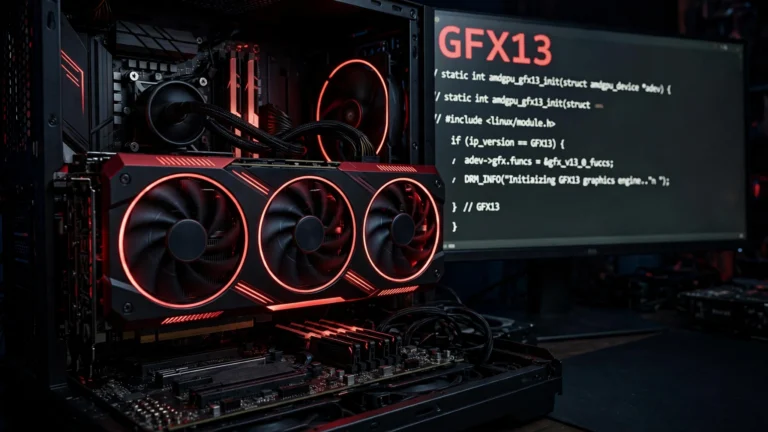
There is at least one real signal pointing to RDNA 5 work being underway. Support for the GFX13 graphics family, which is widely associated with RDNA 5, has already started appearing in Linux driver code. We covered that development in our report on RDNA 5 support landing in Linux driver patches. Driver code appearing months before a launch is normal for a new architecture, and it tells us that development is active. It does not tell us when AMD will talk about it in public.
If RDNA 5 does get stage time on January 5, the most likely format is an architecture preview rather than a card launch. AMD has used that pattern before: outline the architecture first, then announce specific graphics cards later. A preview would still matter, because it would set expectations for the next generation of Radeon cards and for the upscaling and ray tracing features that go with them. But a preview and a launch are different things, and buyers should not plan a purchase around either until AMD confirms it.
For now, the honest summary is short: RDNA 5 is a reasonable thing to hope for at CES 2027, and it is not a reasonable thing to expect.
What the January 5 Date Tells Us
The date itself carries some information. January 5 sits at the very start of CES week, which is the slot major chipmakers use when they want their news to set the tone for the show. AMD would not book a 10:00 a.m. launch event on the opening day for a minor update. The company clearly wants attention on its 2027 plans.
At the same time, an early January stage is a long way from store shelves. Products previewed at CES often ship in the second quarter or later, and some previewed technologies take longer still. The gap between a January announcement and a product you can buy is normal, and it is worth remembering before the hype cycle starts.
The other thing the date tells us is that AMD is ready to talk about its next generation in public, at least in broad terms. Companies do not set a keynote date before they know what they want to say. The message is framed as a preview of computing, which suggests AMD wants to talk about direction and architecture, not just one product. That framing fits a Zen 6 discussion, a laptop chip update, or a graphics architecture tease. It fits all of them, which is why it confirms none of them.
What This Means If You Are Planning a PC Build
For most PC gamers, the practical question is simple: should the January 5 event change what you buy now? The short answer is that it should not change an urgent purchase, but it is a good reason to pause a non-urgent one.
- If your current PC is failing or cannot run the games you want, buy what you need now. A January announcement does not fix a broken PC, and new parts previewed at CES are rarely available immediately.
- If you are planning a high-end CPU upgrade and can wait, January 5 is worth waiting for. If AMD shows Zen 6 desktop parts, you will know within weeks whether to buy current Ryzen chips at lower prices or wait for the new generation.
- If you are buying a laptop, the event matters more. CES is where laptop makers reveal their new models, and a Medusa Point announcement would shape the 2027 laptop lineup directly.
- If you are waiting for a new graphics card, do not plan around RDNA 5 yet. Nothing in AMD’s announcement points to a GPU launch, and RDNA 5 cards are not confirmed for the event.
- Do not pay more for current parts because of a rumor. Speculation about future chips does not change the value of the hardware on sale today, and it is not a reason to rush a purchase.
The general rule for CES season is the same every year: wait for the stage, read the specifications when they are published, and buy on confirmed facts rather than on the rumor cycle that runs before the show.
What to Watch Next
Between now and January 5, the useful signals to watch are concrete ones. An official agenda or speaker list from AMD would narrow down what the event covers. Invitations or briefings sent to press in December would confirm whether the event is a launch or a preview. Driver code, regulatory filings, and laptop maker teasers can hint at what is coming, but all of them need the same caveat: they are clues, not confirmations.
What is not useful is the daily churn of unsourced specification lists and price predictions. Those will multiply as January approaches, and most of them will be wrong. The reliable sequence is simple: AMD announces, the specifications get published, independent testing follows, and then the buying decision makes sense.
AMD’s January 5 event is on the calendar now. Zen 6, Medusa Point, Olympic Ridge, and RDNA 5 are the names to listen for when the keynote begins. Until then, the only confirmed fact is the date, the time, and the place. Everything else is a rumor with a countdown attached to it.
Source: Guru3D